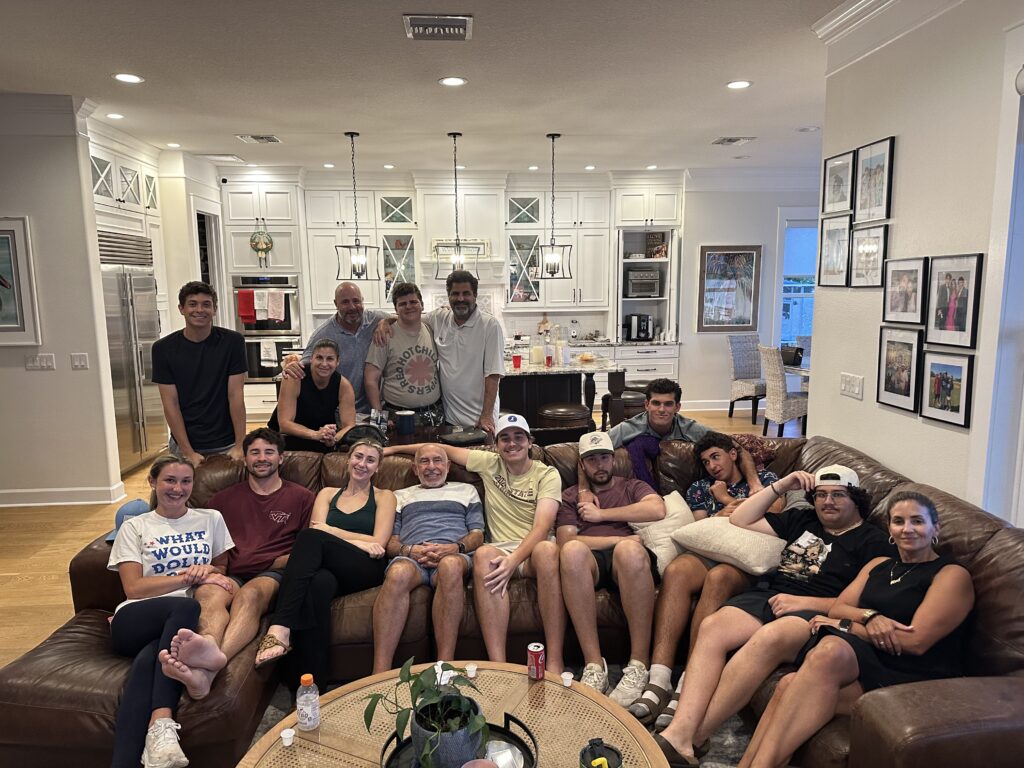
As someone who conducts workshops on prompt engineering for journalists worldwide, I recently had the unique opportunity to introduce the concept to a very different audience: my high school and college-aged grandchildren. This experience, both personal and pedagogical, underscored the universal relevance of prompt engineering and its capacity to bridge generational and professional divides. Since that presentation for my grandkids, I have had the time to reflect on insights from my recent family presentation and how that compares to when I do the same for professional journalists and graduate students.
Tailoring the Craft: A Personalized Approach to Prompt Engineering
When preparing to introduce prompt engineering to my grandchildren, aged 15 to their early 20s, I knew I needed to adapt my usual professional workshop framework to resonate with their interests: baseball, guitar playing, and the ever-looming English class term paper. For instance, I drew analogies between structuring a prompt and strategizing a baseball play: just as a coach must consider the strengths of their players and the game’s context, a prompt engineer must anticipate the AI’s capabilities and frame queries with precision to achieve desired results.
This tailored approach revealed a key academic insight: prompt engineering is not a one-size-fits-all practice but a dynamic process that demands an understanding of both the AI’s mechanics and the user’s objectives. Scholars like Bender et al. (2021) have emphasized the importance of intentional language use when interacting with LLMs, noting that poorly constructed prompts can lead to outputs that are irrelevant or even misleading. My grandchildren’s questions—ranging from “What does GPT stand for?” to “How can I make AI outputs sound like me?”—echoed this need for clarity and personalization, paralleling queries I receive from journalists in my workshops. These similarities suggest that the principles of prompt engineering are universally applicable, transcending age and expertise.
The Curiosity Continuum: Bridging Novice and Expert Inquiries
One of the most striking moments of the session was observing how my grandchildren’s questions mirrored those of seasoned professionals. Their curiosity about the acronym “GPT” (Generative Pre-trained Transformer) and concerns about the veracity of AI-generated content (“How can I be certain what I get from AI is true?”) reflected a shared skepticism and desire for understanding that I encounter in my work with journalists. This convergence highlights a critical academic consideration: prompt engineering is not merely a technical skill but a critical literacy that empowers users to navigate the complexities of AI systems.
The question of truthfulness, in particular, opens a broader discussion about the limitations of LLMs. As noted by researchers like Mitchell et al. (2022), LLMs do not “know” truth in the human sense; they generate responses based on patterns in their training data. Effective prompt engineering, therefore, involves designing queries that mitigate biases and inaccuracies, such as by requesting sources or cross-verifying outputs. For my grandchildren, I illustrated this with a guitar-playing analogy: just as they adjust their strumming technique to produce the right chord, they must refine their prompts to “tune” the AI’s responses. This hands-on metaphor not only made the concept accessible but also underscored the iterative nature of prompt engineering, a principle equally relevant to academic research and professional practice.
A Generation Ahead: The AI Fluency of Youth
What set this session apart from my professional workshops was the surprising AI fluency of my grandchildren. Unlike many of the journalists I train, who often approach AI with a mix of curiosity and caution, every one of my grandchildren claimed familiarity with AI tools, with most describing themselves as at intermediate or advanced stages of use. They casually referenced not only ChatGPT but also Grok and other chatbots, a testament to their generation’s immersion in digital ecosystems. This observation aligns with studies like those by Prensky (2001), who coined the term “digital natives” to describe younger generations’ intuitive comfort with technology. It was humbling to realize that, in some ways, my grandchildren were already ahead of their adult counterparts in their exposure to AI.
To ground their familiarity in a structured framework, I began with a brief overview of AI, focusing on the role of neural networks and their interconnected architecture. I explained how modern LLMs, like those powering the chatbots they mentioned, are trained on vast datasets—equivalent to approximately 175 billion word parameters in some models—enabling them to generate human-like text. Their nods of recognition as I described these concepts suggested a readiness to engage with AI not just as users but as critical thinkers.
The Scent of the Human: Balancing AI and Creativity
Central to my discussion was a philosophy I call “the Scent of the Human,” which emphasizes the irreplaceable role of human creativity, emotion, and perspective in AI-augmented work. I likened AI to a crane—a powerful tool capable of doing the heavy lifting, such as generating drafts or analyzing data—but stressed that it lacks the heart, soul, and opinions that define human expression. For my grandchildren, I illustrated this with practical examples: a term paper might start with an AI-generated outline, but it’s their unique voice and insights that make it compelling; a guitar riff might be inspired by AI-suggested chords, but it’s their passion that brings it to life.
This perspective resonates with academic discourse on human-AI collaboration. Scholars like Dourish (2016) argue that technology should augment, not replace, human agency, a principle that prompt engineering embodies. By crafting prompts that reflect personal intent—whether for a baseball-themed story or a journalistic feature—users can ensure that AI outputs serve as a foundation for, rather than a substitute for, their creativity. My grandchildren’s enthusiasm for this idea was palpable; they saw AI not as a shortcut but as a partner in their creative process.
Hands-On Prompt Engineering: A Baseball Case Study
To bring these concepts to life, I engaged my grandchildren in a practical prompt engineering exercise centered on baseball, an interest particularly close to my grandson Danny’s heart. Danny, a junior in college and a talented left-handed pitcher on a baseball scholarship at a major university, provided the perfect inspiration for the activity. I crafted a prompt for ChatGPT tailored to his academic and athletic context:
Help me with the outline of a paper for my college English class. I am a junior in college and would like to write a historical essay about the success of left-handed pitchers through US baseball history. Provide names of famous lefties. Also, why are left-handed pitchers effective? Who is the most famous left-handed pitcher in US baseball history, and why? Provide sources and details.
This prompt was deliberately structured to demonstrate key principles of prompt engineering: specificity (e.g., “college English class,” “historical essay”), clarity in objectives (e.g., “provide names,” “explain why”), and a request for verifiable information (e.g., “provide sources”). The AI’s response was robust, offering an outline that included names like Sandy Koufax and Randy Johnson, an explanation of left-handers’ strategic advantages (e.g., unique pitch angles that challenge right-handed batters), and a compelling case for Koufax’s legendary status due to his dominance in the 1960s. I walked Danny through how to use this outline as a scaffold, adding his own research and personal insights to develop a full paper, emphasizing the iterative process of refining AI outputs to meet academic standards.
This exercise sparked a lively discussion among the grandchildren about prompt refinement. One suggested adding a request for “recent left-handed pitchers” to make the essay more contemporary, while another proposed specifying a word count to align with typical college assignments. These suggestions align with academic insights from Reynolds and Stoltenberg (2023), who argue that iterative prompt refinement enhances the quality and relevance of AI outputs. By experimenting with the prompt, my grandchildren experienced firsthand how prompt engineering empowers users to shape AI responses to meet specific needs, a skill as valuable on the pitcher’s mound as in the classroom.
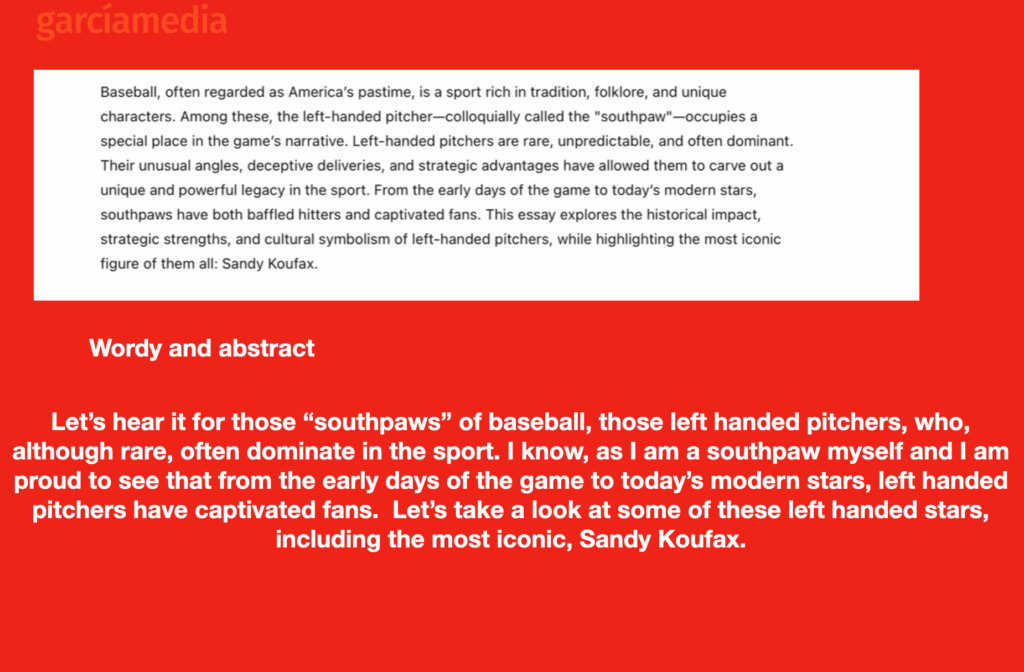
This is how ChatGPT would begin the paper about left handed pitchers. Notice the chatbot version with white background, which tends to be wordy and abstract. Then the suggested rewrite, which makes the content more personal:
The Pitfalls of Blind Trust: A Lesson in Human Vetting
The exercise took an unexpected turn when I asked ChatGPT to generate an image of Sandy Koufax, widely regarded as perhaps the most famous left-handed pitcher in US baseball history. To our amusement—and slight dismay—the resulting image depicted Koufax as a right-handed pitcher. This error provided a perfect segue into the next segment of our presentation: the critical importance of human vetting in AI interactions. The grandchildren burst into laughter, but the moment drove home a sobering lesson: AI, for all its power, is fallible and cannot be trusted blindly.

This incident aligns with academic warnings about over-reliance on AI systems. Scholars like Amodei et al. (2022) highlight that LLMs and generative AI tools can produce plausible but incorrect outputs, particularly in domains requiring factual precision or contextual nuance. In the case of the Koufax image, the AI’s failure to accurately represent his left-handed pitching stance underscored the need for users to verify outputs against reliable sources. I used this opportunity to discuss strategies for vetting AI-generated content, such as cross-referencing with primary sources, consulting domain experts, or, in Danny’s case, drawing on personal knowledge as a left-handed pitcher. The grandchildren’s giggles gave way to thoughtful nods as they internalized the message: prompt engineering is only half the equation; critical evaluation completes the process.
Personalization and Style: The Human Touch in AI Interaction
Perhaps the most engaging part of the session was addressing how to customize AI outputs to reflect personal needs and style—a question that resonates deeply with both my grandchildren and the journalists I train. For a teenager crafting a term paper or a journalist writing a feature article, the ability to infuse AI-generated content with their unique voice is paramount. This process requires what I term “prompt sculpting,” where users iteratively refine their inputs to align with their stylistic preferences. For example, I showed my grandchildren how to prompt an AI to generate a baseball-themed essay in the tone of a sports commentator versus a casual fan, demonstrating how slight changes in wording can yield dramatically different results.
This practice aligns with academic discussions on human-AI collaboration. Studies like those by Gao et al. (2023) suggest that well-crafted prompts can enhance creative output by guiding LLMs to produce content that aligns with user intent. In my workshops, journalists often ask how to adapt AI-generated drafts to match their publication’s tone or their personal writing style. The answer lies in prompt engineering’s iterative nature: experimenting with phrasing, specifying tone, and providing context. Watching my grandchildren light up as they saw AI generate a paragraph that sounded “like them” was a reminder of the empowering potential of this skill, whether for a high school essay or a professional newsroom.
A Lasting Impact: Guiding the Next Generation
As the session drew to a close, I hoped my grandchildren had internalized a key takeaway: AI is a powerful tool—a thinking companion, a crane for the heavy lifting of research and data—but it is no substitute for the uniquely human ability to create and connect disparate ideas. Their generation will undoubtedly navigate a world where AI is ever-present, and I felt a deep sense of satisfaction in setting them on a path toward responsible and thoughtful use of these technologies. The fact that a couple of the grandchildren asked for a copy of the presentation was a heartwarming affirmation of their engagement and curiosity. It suggested that they saw value not only in the technical aspects of prompt engineering but also in the broader philosophy of balancing AI’s capabilities with human ingenuity.
This enthusiasm aligns with academic perspectives on the role of education in preparing young people for an AI-driven future. Scholars like Selwyn (2022) emphasize the importance of fostering “AI literacy,” which includes not only technical proficiency but also critical awareness of AI’s limitations and ethical implications. By engaging my grandchildren in hands-on exercises and candid discussions about AI’s strengths and pitfalls, I aimed to cultivate this literacy, equipping them to wield AI as a tool for creativity and problem-solving while remaining grounded in their own perspectives and values.
A Personal Reflection: The Joy of Teaching Across Generations
Beyond the academic and technical insights, this experience was profoundly personal. Seeing my grandchildren engage with AI through the lens of their passions—baseball, music, and writing—was a departure from our usual informal interactions. Their rapt attention as I presented, not as “Grandpa” but as a facilitator of knowledge, was both humbling and exhilarating. It reminded me that prompt engineering is not just about mastering technology but about fostering curiosity and agency in how we interact with it. The questions they asked, so similar to those of my professional audiences, reinforced the idea that the principles of prompt engineering are accessible to all, regardless of age or expertise.
My experience introducing prompt engineering to my grandchildren highlighted its universal relevance, as their questions mirrored those of professional journalists, underscoring shared concerns about clarity, truth, and personalization. By tailoring prompts to individual contexts—be it a baseball strategy or a term paper—users can harness AI’s potential while maintaining their unique voice.
Our workshop deals with the two big revolutions facing editors
For me, it is imperative that editors approach content creation thinking in terms of mobile first.
Mobile first involves the type of transformation where all content is prepared thinking from small to large platform. Thinking small platform does not mean that the reporter conceptualizing a story for mobile consumption should not think BIG. So, plan from small to large, but think big in terms of the story content and the visual assets that go with it.
While mobile first is still elusive to so many newsrooms around the planet, here we are, in 2024, faced with an even bigger challenge not just knocking at our doors, but already IN: Artificial Intelligence.
Transformation and a change of mentality to face these challenges is the first step. Training and education to tackle them with a sense of focus and direction is essential.
That’s where our Garcia Media workshops come in
Our Garcia Media Mobile Storytelling workshops introduce your editorial team to the way we write, edit and design for mobile platforms. This one-day program includes a presentation and a hands-on workshop. We’ve added a new segment about AI for content creation.
Newsrooms around the planet have gone mobile-first after a Garcia Media workshop!
Our Garcia Media Mobile Storytelling workshops are proven to introduce your editorial team to the way we write, edit and design for mobile platforms. It is a one-day program that involves a presentation (where I summarize my Columbia University class content), and follow it with a hands on workshop.
For details, to customize, and to book: mario@garciamedia.com
How we use AI
Honored to be mentioned here:
https://www.newsroomrobots.com/p/how-10-news-industry-leaders-use
Order my AI book here:
https://thaneandprose.com/…/preorder-ai-what-to-expect…
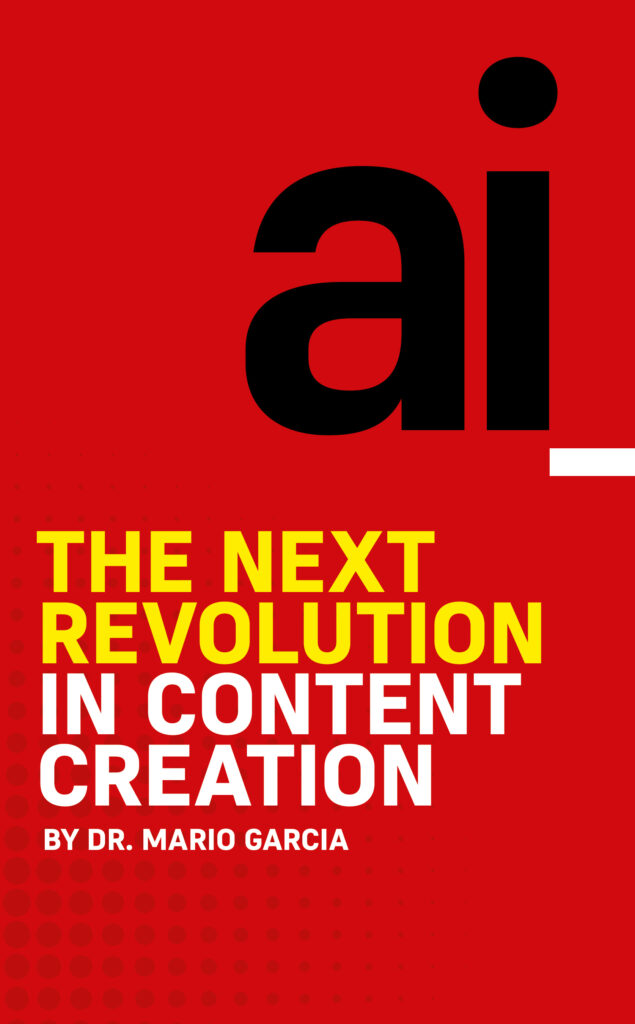
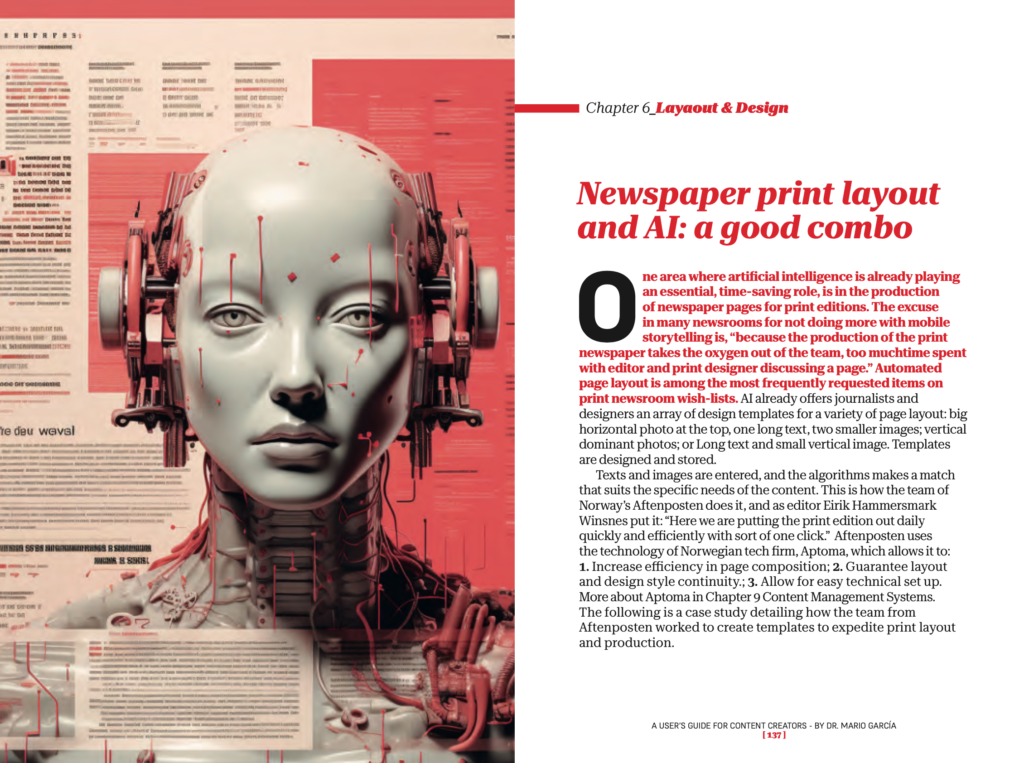
Here is a chance to pre-order my new book about Artificial Intelligence and content creation. The first 25 copies sold will be signed! Order here:
https://thaneandprose.com/…/preorder-ai-what-to-expect…
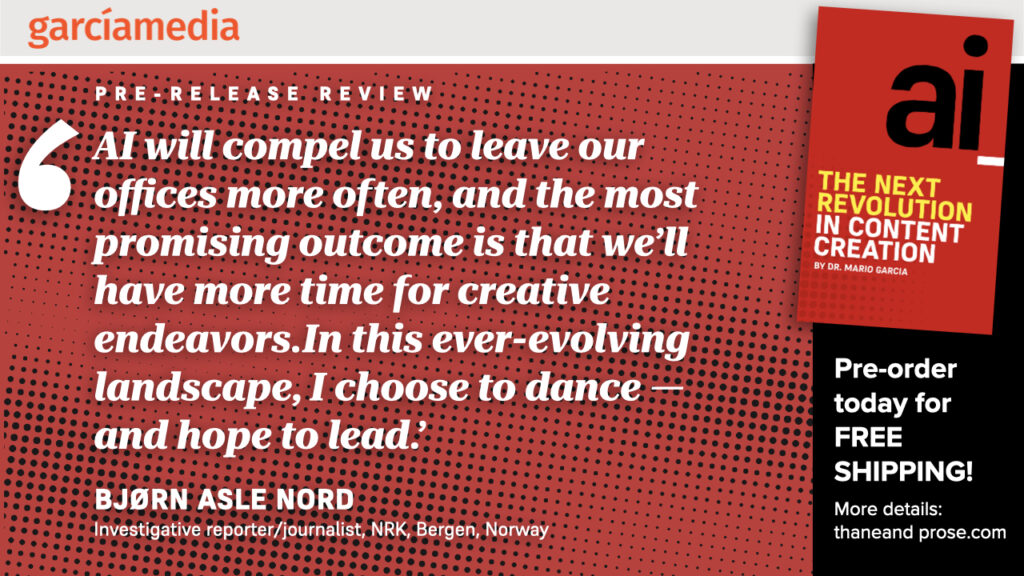
Reviews for AI book:

Did you read The Story yet?
I urge you to consult my latest book, The Story, a trilogy full of tips and explanations about mobile storytelling, which represents the latest genre for journalists to explore. See information below:
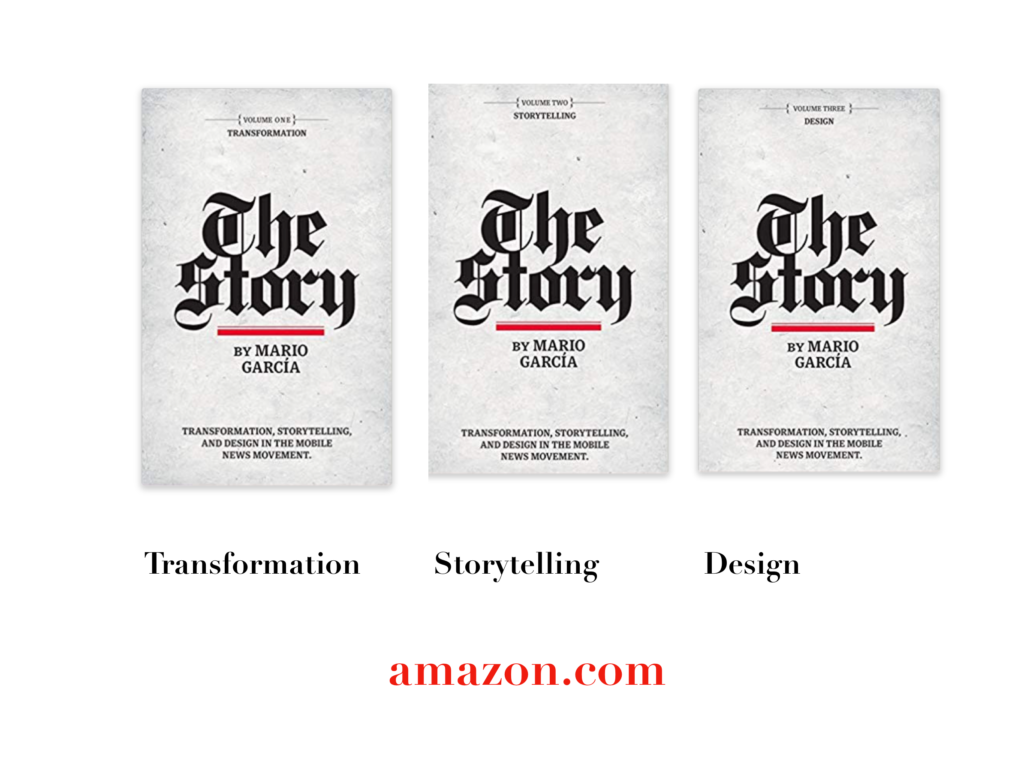
The full trilogy of The Story now available–3 books to guide you through a mobile first strategy. Whether you’re a reporter, editor, designer, publisher, corporate communicator, The Story is for you! https://amazon
Volume 1: Transformation
https://books.apple.com/us/book/the-story-volume-i/id1480169411
Volume Two: Storytelling
https://books.apple.com/us/book/the-story-volume-ii/id1484581220
Volume Three: Design
https://books.apple.com/us/book/the-story-volume-iii/id1497049918
Order the print edition of The Story, from Amazon, here:
TheMarioBlog post #4006