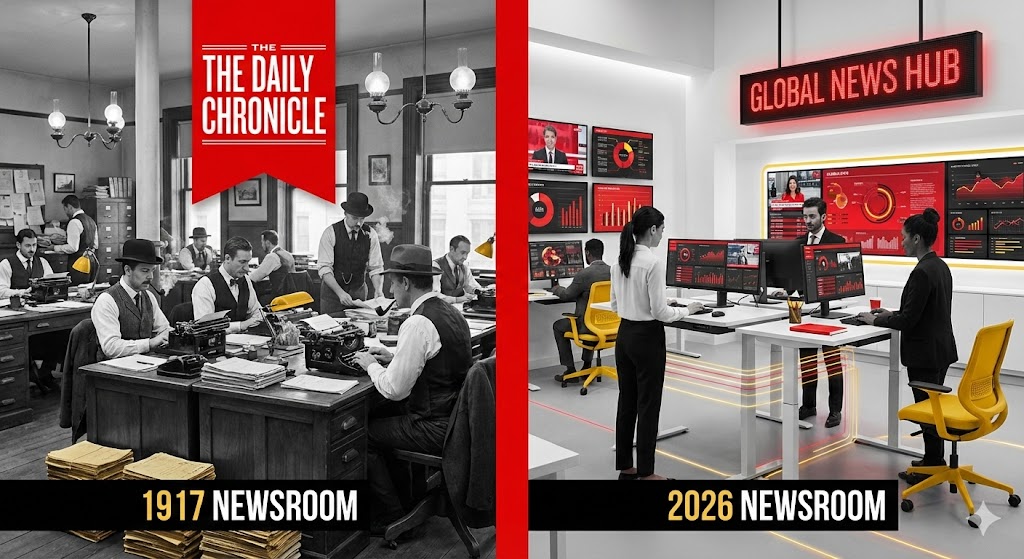
Winter days in Tampa, Florida, can turn into relaxing but productive ones. It’s been an unusually cold week here—temperatures dropping to the 30s and hovering in the 40s even when the sun shines. I found myself in the kitchen making a pot of red beans chili, then retreating to my favorite chair with a small blanket and a great old classic: M. Lyle Spencer’s iconic 1917 textbook, News Writing.
Opening this book felt like finding a treasure chest in the attic. At almost 79, I am deeply engaged with the current challenges of our craft—mobile-first strategies and AI as a “crane” and thinking companion for journalists. Yet, there is something special about revisiting this Spencer manifesto. It served as the manual for so many of the editors I worked with and trained under in the early stages of my career.
The DNA of Behavior
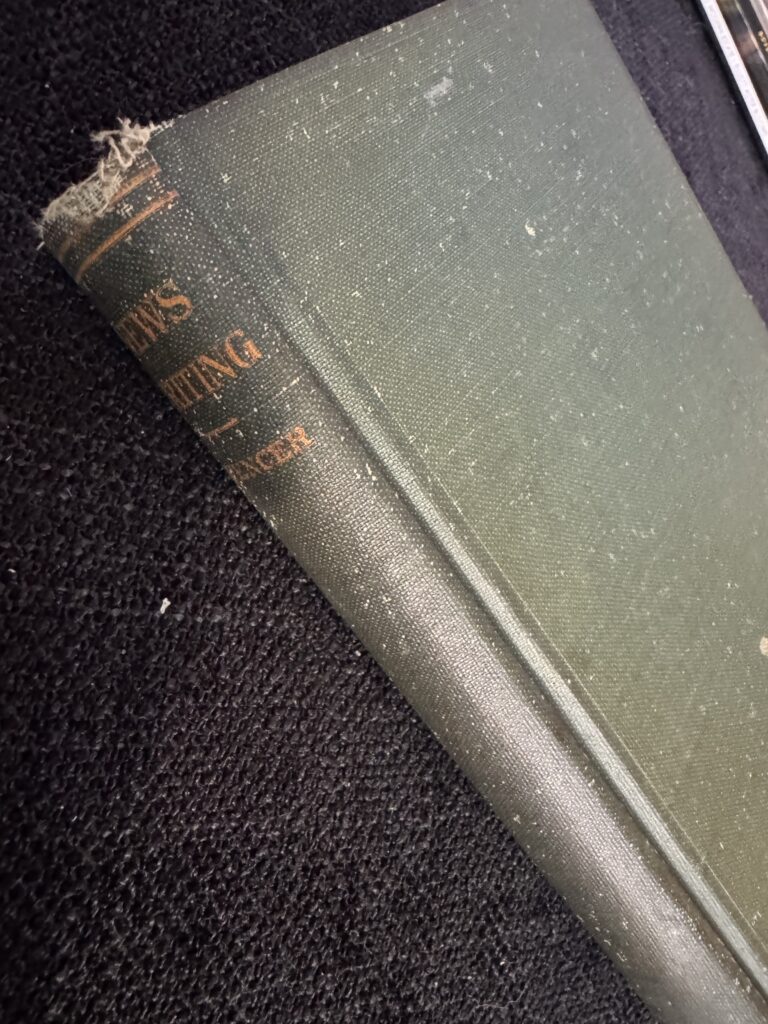
Spencer’s textbook was more than a guide to prose; it was a manual for the journalistic soul. He advised future reporters on the nuances of professional conduct—such as showing up 15 minutes before the City Editor arrived each day. He insisted on the sanctity of names and addresses, the absolute avoidance of “fine writing” (over-adorned prose), and the vital necessity of a reporter being “an individual of character who understands that their first duty is to the truth, not the source.”
Three Rooms: A Fading Geography
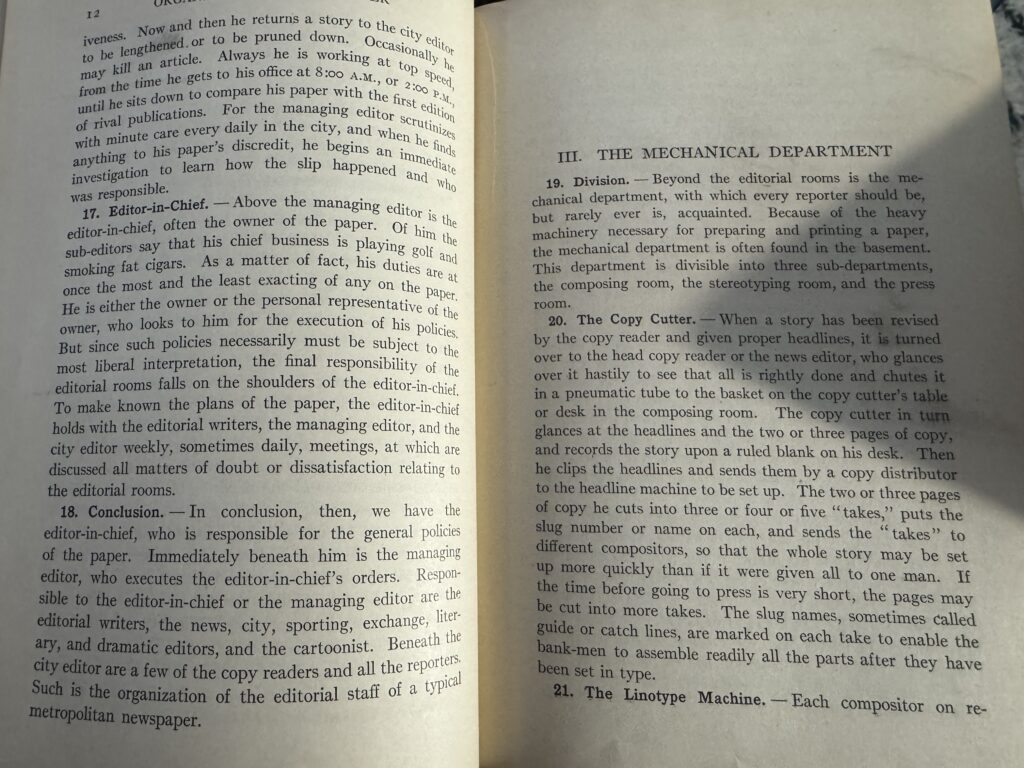
Spencer divided the 1917 newspaper world into three distinct, walled-off continents:
- The Editorial Room: The “alchemy of words” and intellect.
- The Mechanical Department: A basement of hot lead, grease, and the rhythmic clatter of Linotype machines.
- The Business Department: The world of heavy ledgers and commercial survival.
In 1917, these rooms were connected only by pneumatic tubes and the ticking of a clock. But as I sat in the cold Florida morning, I realized that in 2026, those three rooms have finally collapsed into one.
My smartphone is the Editorial Room. It is the Mechanical Room. It is the Business Room. The basement has moved into our pockets.
The “Mechanical Indifference” of 2026
Spencer noted that the mechanical team in 1917 often didn’t care about the news; they cared about the “forms” and the “clock.” If a lead paragraph was brilliant but didn’t fit the column width, the printer would simply cut it.
Today, the “Mechanical Room” exists as the Product Department. While these tech-savvy teams help us create engaging mobile experiences, many editors still view them as “the guys in the basement.”
This creates a modern friction I’ve discussed before: The “Mechanical Indifference” of 1917 has become the “Data-Driven Indifference” of 2026. Product teams are often driven by KPIs and A/B testing rather than a “Nose for News.” To them, a story is “Content”—a variable to be tested against a layout.
Spencer’s Timeless Advice: “Every reporter should be, but rarely ever is, acquainted with the mechanical department… knowledge of the machines makes for a better-prepared manuscript.”
The Vanishing Safety Net: How I miss those old copy editors!
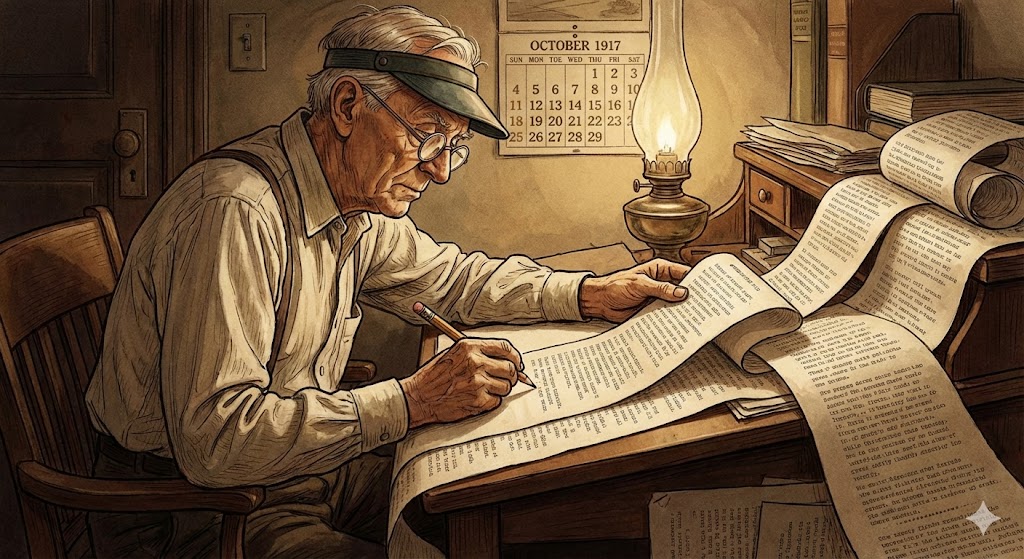
If I feel any nostalgia reading Spencer, it’s for the Copy Editors. According to Spencer:
“They correct spelling and punctuation, rewrite a story when the reporter has missed the main feature, reconstruct the lead, cut out contradictions, duplications and libelous statements, and in general make the article conform to the length and stye demanded by the paper.”
In 1917, a story passed through several layers of eyes before it hit the press. Today, many reporters file directly from their phones, with only their own eyes on the copy. I miss those guardians who put our stories to the test—the skeptics who asked the questions readers would ask and shaped the narrative to be factual and informative until the next update. Without them, we are walking a tightrope without a net.
A Nose for Signal
Spencer’s emphasis on “developing a nose for news” remains our most enduring lesson.
“…without a nose for news—without the ability to recognize a story when one sees it—a reporter cannot hope to succeed.”
- In 1917: It meant sniffing out a story on a street corner.
- In 2026: It means having a “Nose for Signal.” Amidst the noise of social media and AI-generated filler, the journalist’s job is still to find the human scent. Accuracy is no longer just a standard; it is the only currency we have left. In 1917, a mistake meant a correction in tomorrow’s paper. Today, a mistake erodes a century of trust in seconds.
The “One Room” Manifesto
In the geography of the past, distance was protection. Today, that geography has fused into a singular, high-stakes ecosystem. Our modern newsroom must be an integrated architecture where the story is the bedrock:
- Editorial provides the Soul (The “Why”).
- Product provides the Vehicle (The “How”).
- Marketing provides the Pulse (The “Who”).
- AI scales the Scent (The “Reach”).
We have moved the printing press out of the basement and placed it directly in the center of the newsroom.
It’s all about the story
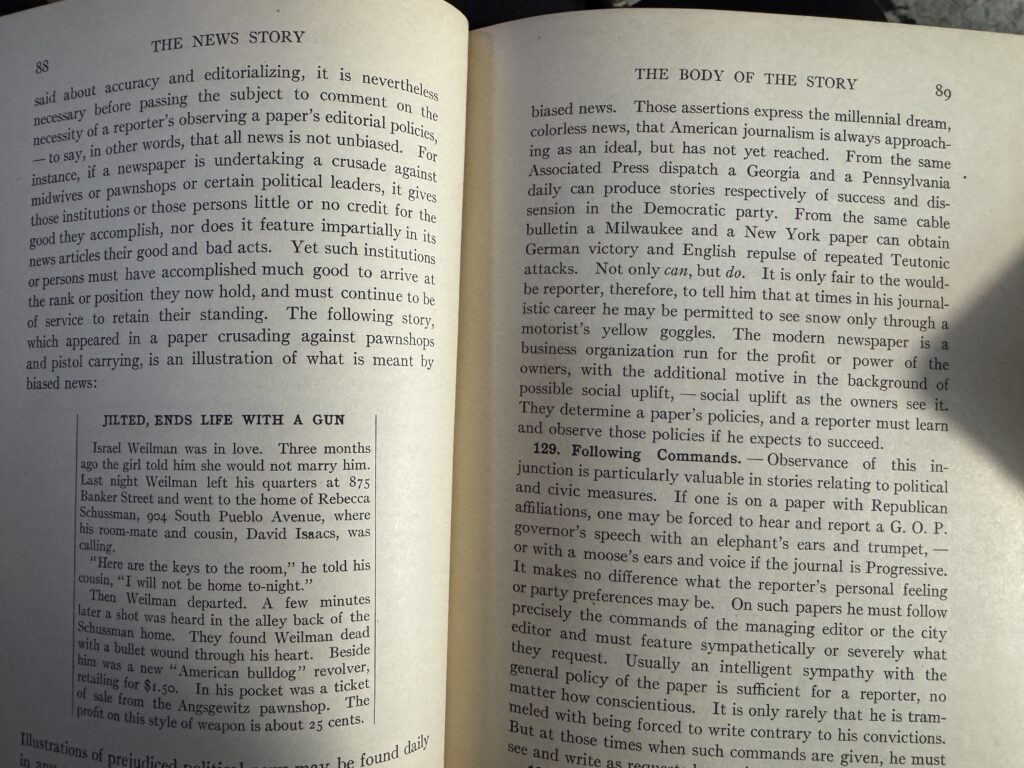
Lyle Spencer’s book was a manual for three rooms. My mission today—and the goal of my workshops—is to provide the manual for the One Room.
The reader doesn’t care about our internal departments or our tech stack.
If there is one element that was the same in 1917 and 2026 it is that it is all about the story—how informative, engaging and timely it is.
Takeaways:
-In 1917, Lyle Spencer described a newsroom of physical distance. Today, that distance is where revenue and relevance go to die. Our proposal replaces the “three rooms” with a single, concentric operation where the story is the center of gravity.
-No longer just “writers,” our Editorial Core consists of Prompt Architects. They don’t just write a story; they define its “scent.” They establish the truth, the tone, and the rules for every piece of reporting.
-We bring the “Mechanical Room” out of the basement. Engineers and Product Designers sit inside the story meetings. As a reporter discovers a scoop, the Mechanical Ring is already building the Mobile Push Architecture and the Interactive UX to house it.
-Marketing is no longer a separate department that “sells” the paper. It is the Audience Sensor. They monitor the social ecosystem in real-time, feeding data back to the Core about what the city needs now. They don’t just find subscribers; they nurture a community.
Remembering Col. Joseph Murphy
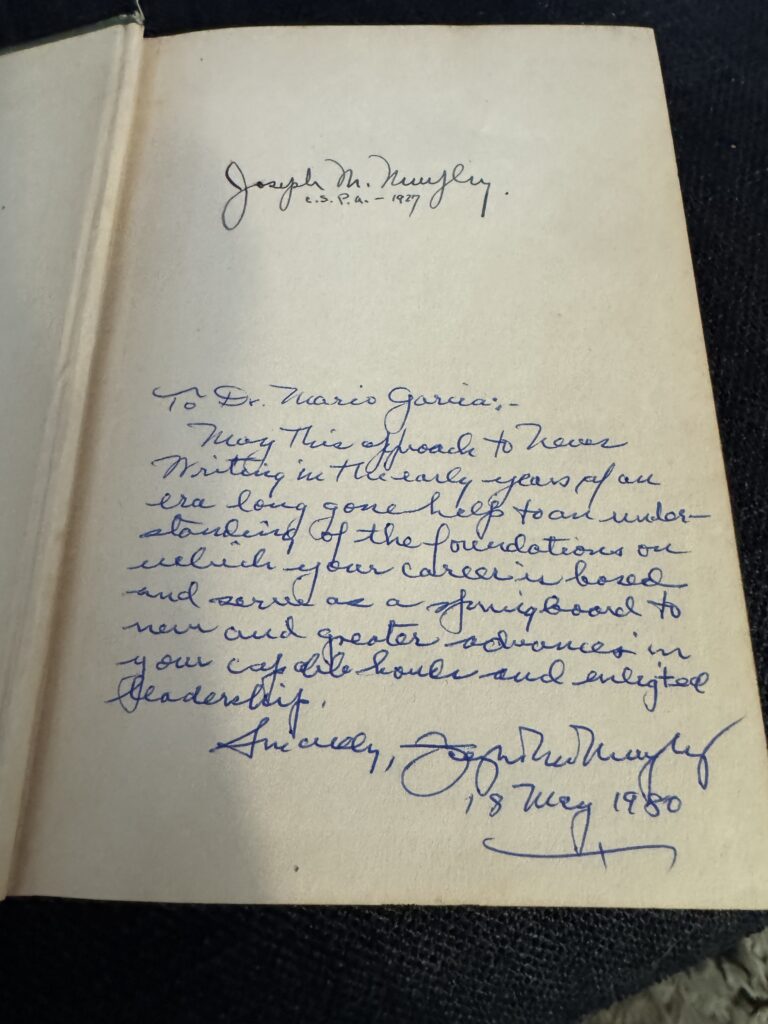
One of the reasons I treasure my copy of Lyle Spencer’s 1917 News Writing textbook is because it was given to me by a dear friend, Colonel Joseph M. Murphy,founder and first director of the Columbia Scholastic Press Association (CSPA) at Columbia Uniersity. I was a young professor at Syracuse University when Col. Murphy presented me with the book. I read what he wrote as a dedication to me and look back at how much has happened in our craft, and in my own career:
“May this approach to news writing in the early years of an era long gone help to an understanding of the foundations on which your career is based and serve as a springboard to new and greater advances in your capable hands and enlighted leadership.” —18 May 1980.
Consulting with Heart (2025)

Consulting with Heart — my 17th book—is here! Ready to order. Thanks for making it already the #1 Hot New Release for Media & Communications Books at Amazon.com. Also available from Apple, Barnes & Noble, Target, Torchlight.
Written from my more than 200 diaries. Fueled by people I have met along the way in my journey through 122 countries,
this book isn’t just about strategy. It is about my five-decade journey, 750+ projects and my role as an interpreter of dreams for my clients.
amazon.com/dp/1966629958; Apple Books – ebook
Workshop deals with the two big revolutions facing editors
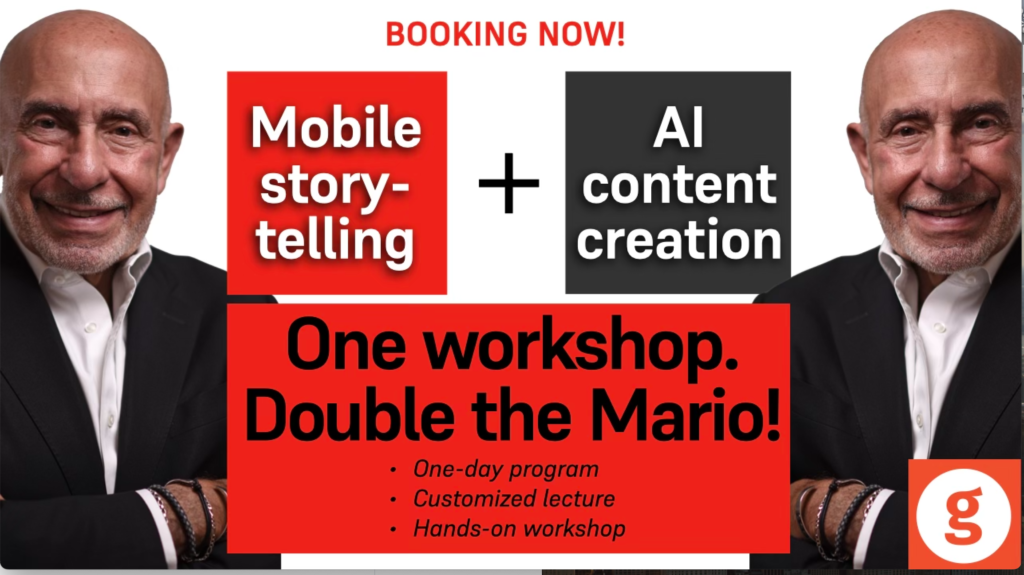
For me, it is imperative that editors approach content creation thinking in terms of mobile first.
Mobile first involves the type of transformation where all content is prepared thinking from small to large platform. Thinking small platform does not mean that the reporter conceptualizing a story for mobile consumption should not think BIG. So, plan from small to large, but think big in terms of the story content and the visual assets that go with it.
While mobile first is still elusive to so many newsrooms around the planet, here we are, in 2024, faced with an even bigger challenge not just knocking at our doors, but already IN: Artificial Intelligence.
Transformation and a change of mentality to face these challenges is the first step. Training and education to tackle them with a sense of focus and direction is essential.
That’s where our Garcia Media workshops come in
Our Garcia Media Mobile Storytelling workshops introduce your editorial team to the way we write, edit and design for mobile platforms. This one-day program includes a presentation and a hands-on workshop. We’ve added a new segment about AI for content creation.
Newsrooms around the planet have gone mobile-first after a Garcia Media workshop!
Our Garcia Media Mobile Storytelling workshops are proven to introduce your editorial team to the way we write, edit and design for mobile platforms. It is a one-day program that involves a presentation (where I summarize my Columbia University class content), and follow it with a hands on workshop.
For details, to customize, and to book: mario@garciamedia.com
How we use AI
Honored to be mentioned here:
https://www.newsroomrobots.com/p/how-10-news-industry-leaders-use
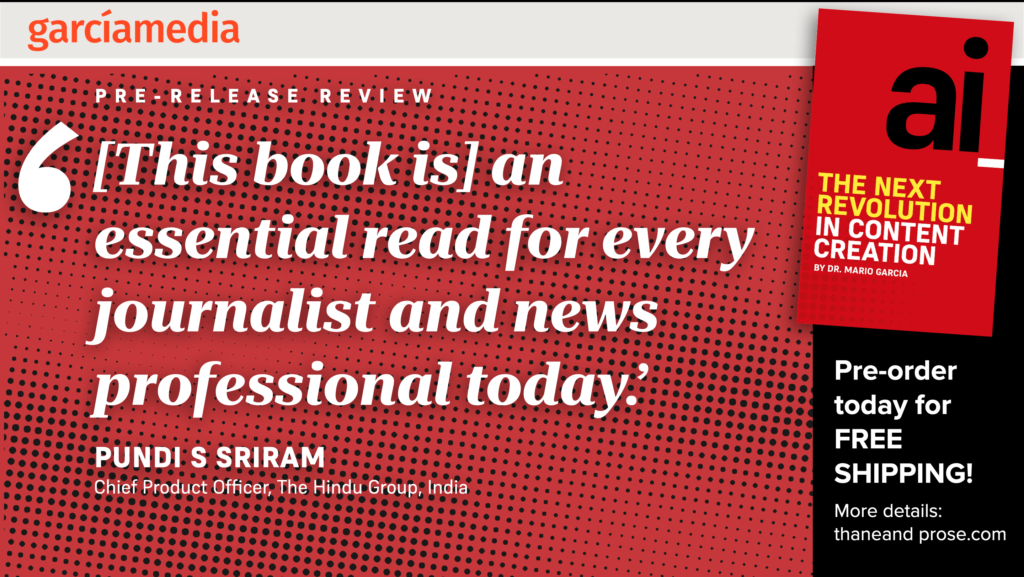
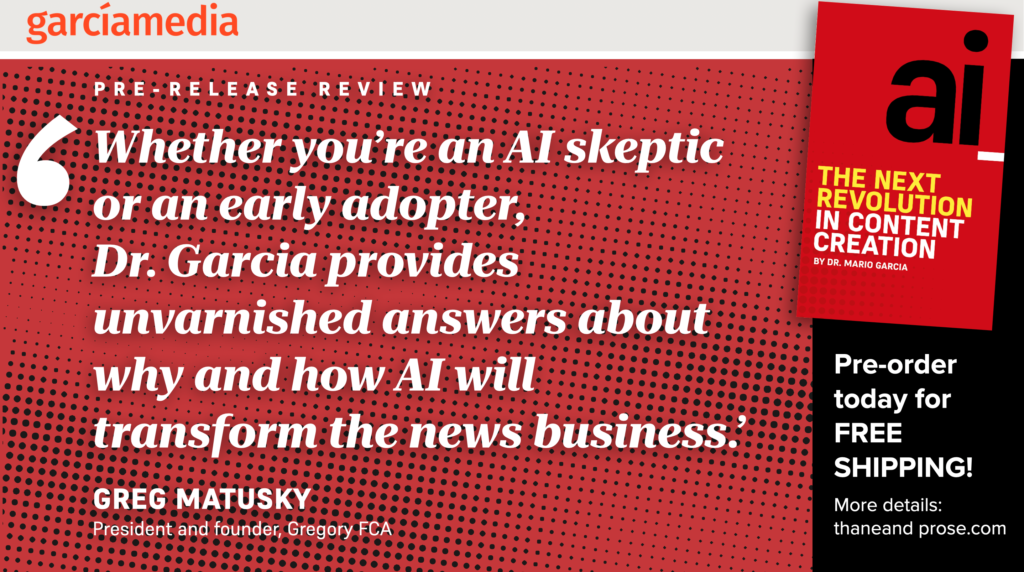
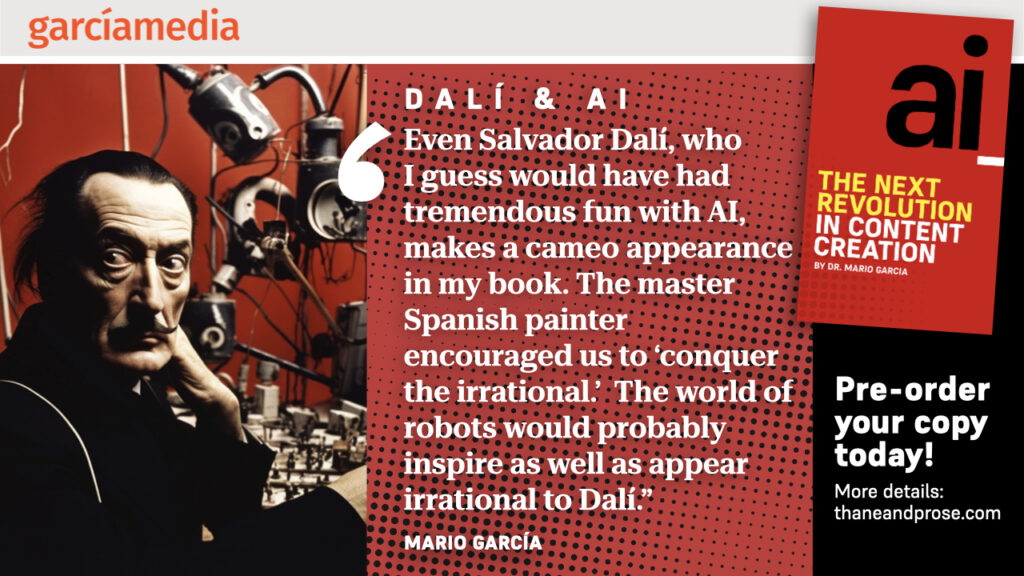
Order my AI book here:
https://thaneandprose.com/…/preorder-ai-what-to-expect…
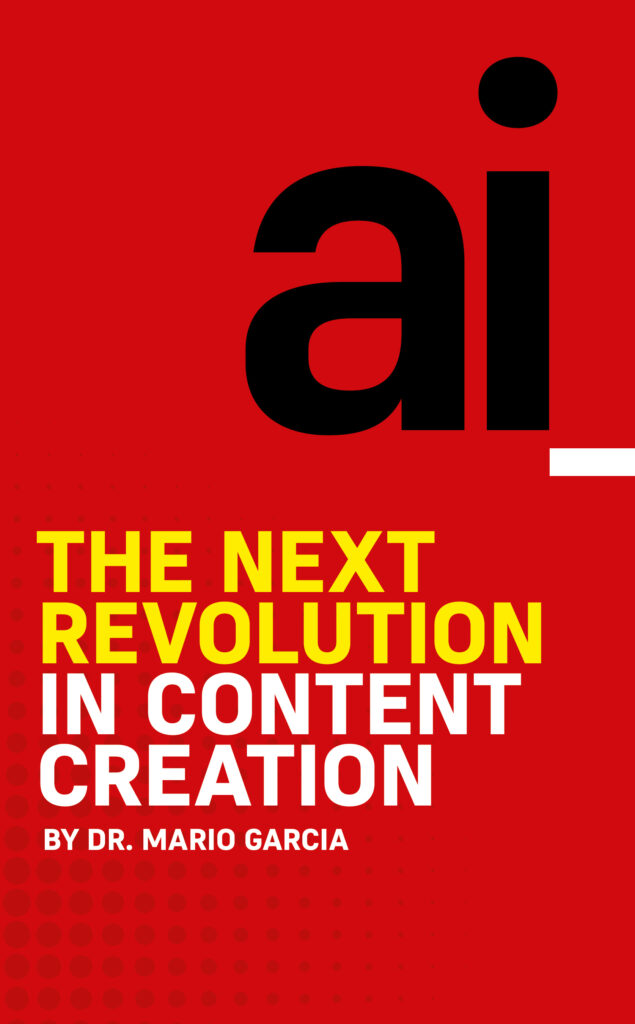
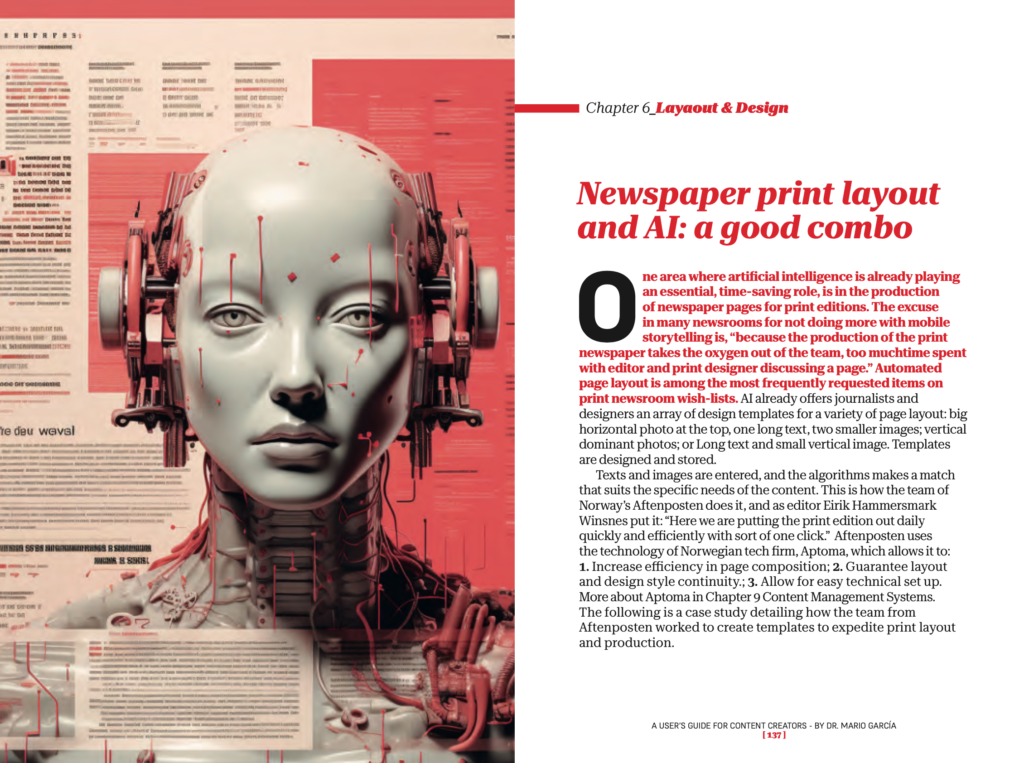
Here is a chance to pre-order my new book about Artificial Intelligence and content creation. The first 25 copies sold will be signed! Order here:
https://thaneandprose.com/…/preorder-ai-what-to-expect…
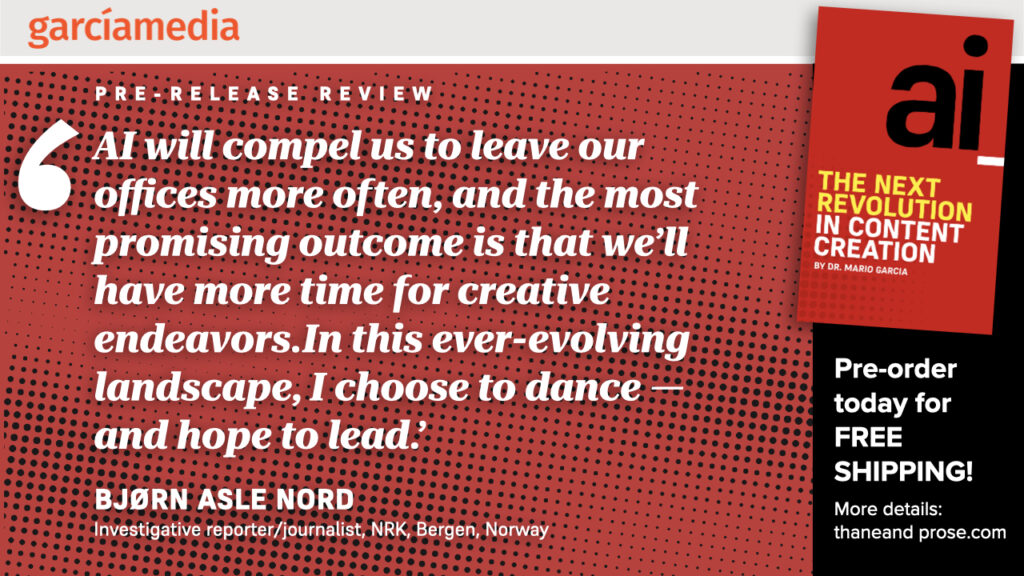
Reviews for AI book:
Did you read The Story yet?
I urge you to consult my latest book, The Story, a trilogy full of tips and explanations about mobile storytelling, which represents the latest genre for journalists to explore. See information below:
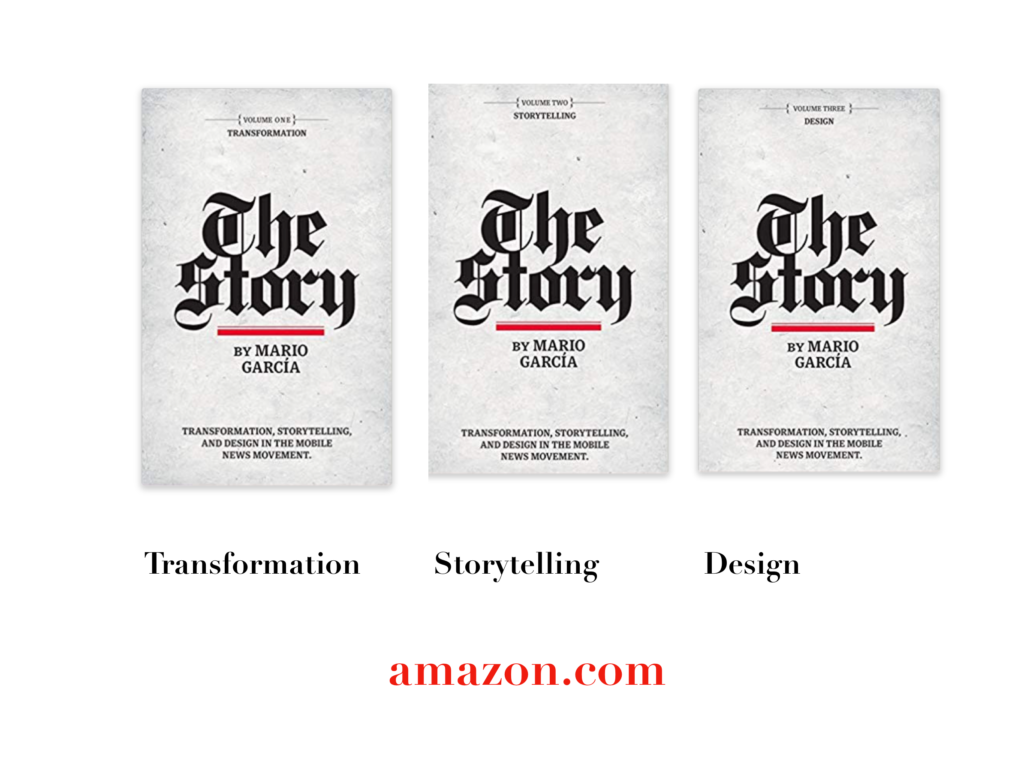
The full trilogy of The Story now available–3 books to guide you through a mobile first strategy. Whether you’re a reporter, editor, designer, publisher, corporate communicator, The Story is for you! https://amazon
Volume 1: Transformation
https://books.apple.com/us/book/the-story-volume-i/id1480169411
Volume Two: Storytelling
https://books.apple.com/us/book/the-story-volume-ii/id1484581220
Volume Three: Design
https://books.apple.com/us/book/the-story-volume-iii/id1497049918
Order the print edition of The Story, from Amazon, here:
TheMarioBlog post #4013